
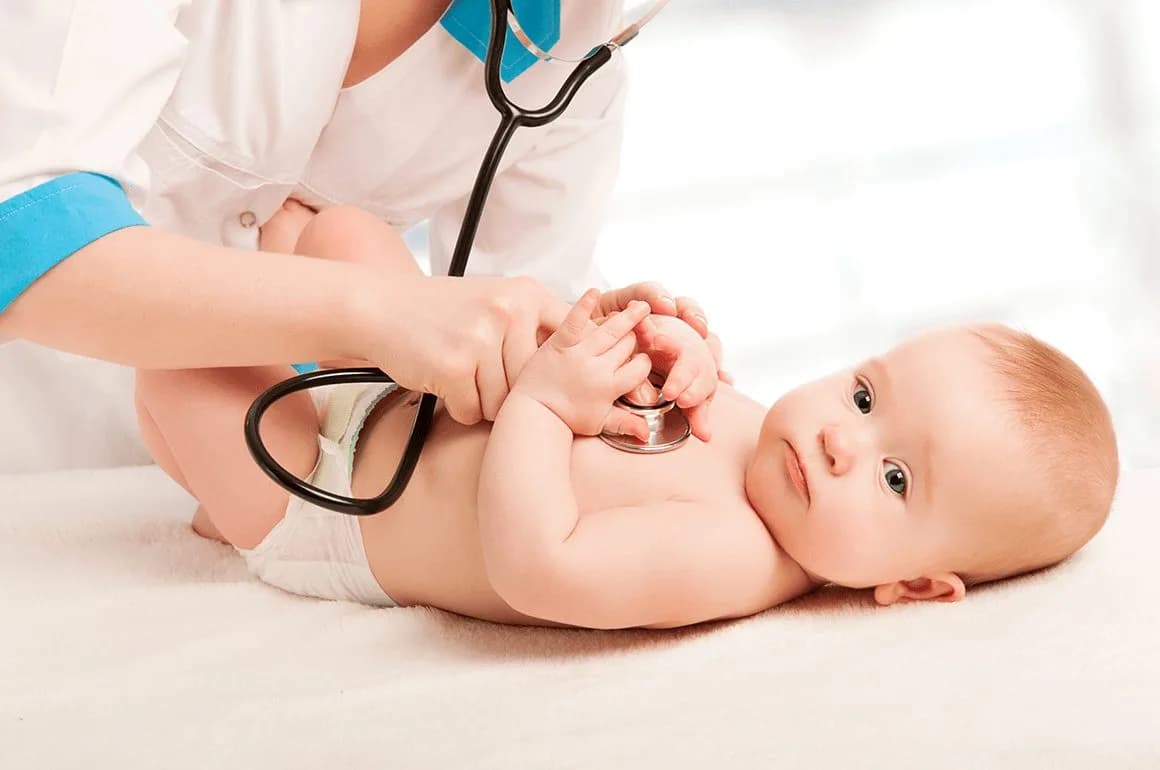
Medical department
Pediatrics
Examinations, vaccinations, developmental monitoring and treatment for children from birth to age 15.

A child is not a smaller version of an adult. Doses, normal values and even the course of an illness vary with age: a fever that looks ordinary in a one-year-old can mean something entirely different in a ten-year-old.
The department works in two directions: treatment when a child is sick and monitoring when they are well. The second gets less attention but has a greater long-term impact: growth, the vaccination schedule and developmental milestones are tracked precisely at routine checkups.
Pediatrics
Conditions we see
The list is not exhaustive: if your complaint is not here, you can still contact us.
Acute conditions
- Fever and upper respiratory infections
- Bronchitis and pneumonia
- Diarrhea, vomiting and dehydration
- Ear infections
- Abdominal pain in children
Development and monitoring
- Monitoring of height and weight
- Keeping up with the vaccination schedule
- Newborn care
- Nutrition and vitamin advice
- Preschool health checkups
Chronic and special conditions
- Anemia
- Allergies and atopic dermatitis
- Follow-up of children born with congenital (intrauterine) infections
- Initial assessment of endocrine disorders
In the department
Examinations and procedures
- Pediatric examination and consultation
- Vaccinations
- Blood sampling and tests for children
- Anthropometric measurements and developmental assessment
- Pediatrician home visits
- Care and feeding guidance for parents
When to see a doctor
- If a fever lasts more than three days
- If your baby refuses to feed or seems lethargic
- Difficult or rapid breathing
- Slowed growth in height or weight
- Scheduled visits according to the vaccination schedule
Your visit
How the appointment goes
1. Check-in
Bring your child's vaccination record and any previous test results.
2. Examination
The doctor takes measurements, performs a full examination and listens to the parent's observations.
3. Explanation
The diagnosis and treatment are explained in plain language, and medication doses are given in writing.
4. Next steps
You are told when to come back for follow-up and which signs mean you should come in sooner.
Questions
Frequently asked questions
Should I come in right away for a fever?
In a baby under three months old, any fever needs urgent evaluation. In an older child who is otherwise doing well, it is possible to watch for a day or two.
We fell behind on vaccinations. What should I do?
The schedule can be caught up. Bring the vaccination record, and the doctor will plan the remaining doses in the right order.
Can a pediatrician come to our home?
Yes. Pediatric examinations are arranged as part of our home medical service.
Up to what age does the pediatrician see children?
From birth to age 15.
Medical departments
Other departments


Laboratory
Biochemical, hormonal, microbiological and molecular genetic testing, with samples taken at the clinic or at your home.


Diagnostics
Computed tomography, digital X-ray, ultrasound and Doppler, in one day and at one address.


Urology
Diagnosis, treatment and prevention of diseases of the urinary tract and the male reproductive system.


Aesthetic surgery
Surgical procedures that correct appearance and also address functional problems.


ENT (Ear, Nose and Throat)
Diagnosis and treatment of ear, nose and throat conditions in adults and children, with endoscopic examination.


Orthopedics and traumatology
The musculoskeletal system: fractures, joint diseases, sports injuries and spine problems.