
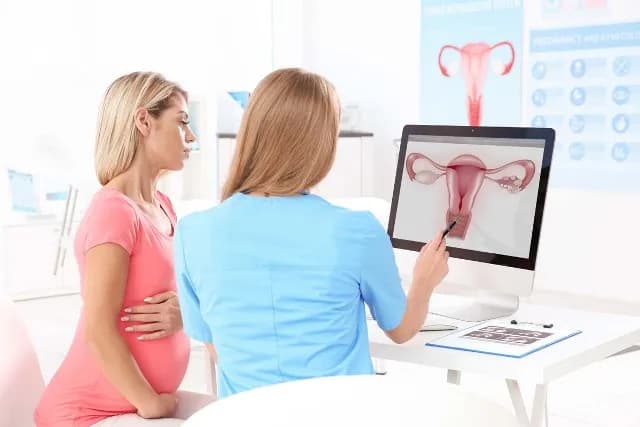
Medical department
Gynecology
Women's health at every stage, from pregnancy monitoring to menopause.

A gynecological examination is needed not only when you have symptoms but also when you do not. Some cervical changes, ovarian cysts and hormonal disorders cause no symptoms for a long time and are detected only at a routine checkup.
The department covers pregnancy care, treatment of infections, evaluation of menstrual disorders and support through menopause. The examination is completed at the same address together with ultrasound and laboratory tests, so you do not need to go to another clinic for results.
Gynecology
Conditions we see
The list is not exhaustive: if your complaint is not here, you can still contact us.
Pregnancy
- Pregnancy planning
- Antenatal (prenatal) care
- Postnatal (postpartum) care
- Evaluation for ectopic pregnancy
Inflammation and infection
- Vaginal infections and yeast infections
- Chlamydia and other sexually transmitted infections
- Vaginal dryness
- Genital warts
Hormonal and structural
- Painful and irregular periods
- Ovarian cysts and fibrocystic lesions
- Cervical diseases
- Menopausal symptoms
- Urinary incontinence
In the department
Examinations and procedures
- Gynecological examination and consultation
- Gynecologic ultrasound
- Cervical smear (Pap smear)
- Ordering and monitoring of hormone panels
- Ultrasound monitoring during pregnancy
- Contraception counseling
When to see a doctor
- Once a year for a preventive checkup, even without symptoms
- When the regularity or character of your periods changes
- With persistent lower abdominal pain
- When planning a pregnancy, for a preconception checkup
- With symptoms related to the transition to menopause
Your visit
How the appointment goes
1. Conversation
Your menstrual history, previous pregnancies and current symptoms are clarified.
2. Examination
A gynecological examination is performed; a smear is taken if indicated.
3. Ultrasound
If needed, an ultrasound is performed the same day at the same location.
4. Plan
Based on the results, treatment or the timing of your next follow-up is determined.
Questions
Frequently asked questions
When should I have a preventive checkup?
Once a year is recommended after becoming sexually active; your doctor may set a different interval based on risk factors.
Can I be examined during my period?
For a routine checkup, it is best to wait until your period ends. If you have severe pain or bleeding, do not wait: come in.
How many prenatal visits are there?
In a normal pregnancy, the number and timing of visits are set by your doctor on an individual schedule.
Is an ovarian cyst dangerous?
Most cysts are functional and resolve on their own. Their size and type are monitored with ultrasound, and decisions are based on that.
Medical departments
Other departments


Laboratory
Biochemical, hormonal, microbiological and molecular genetic testing, with samples taken at the clinic or at your home.


Diagnostics
Computed tomography, digital X-ray, ultrasound and Doppler, in one day and at one address.


Urology
Diagnosis, treatment and prevention of diseases of the urinary tract and the male reproductive system.


Aesthetic surgery
Surgical procedures that correct appearance and also address functional problems.


ENT (Ear, Nose and Throat)
Diagnosis and treatment of ear, nose and throat conditions in adults and children, with endoscopic examination.


Orthopedics and traumatology
The musculoskeletal system: fractures, joint diseases, sports injuries and spine problems.